
Engagement shoots are dedicated pre-wedding sessions designed to familiarise couples with their photographer and the camera, reducing anxiety and producing more natural, authentic images on the wedding day. The term “engagement shoot” is widely used, though photographers also call these sessions pre-wedding shoots or engagement portrait sessions. Whatever the name, the purpose is the same: build comfort before it matters most. Research confirms that repeated camera exposure reduces discomfort and behavioural change over time. That finding explains precisely why engagement shoots build photographer comfort and why so many couples consider them one of the best decisions they made before their wedding.
Why engagement shoots build photographer comfort through repeated exposure
Camera anxiety is real, and the numbers back it up. A 2026 Springer Nature systematic review and meta-analysis found that participants report feeling uncomfortable 19% of the time in camera presence, and 15% actively change their behaviour as a result. That means roughly one in five people stiffen, go quiet, or perform when a lens points at them. The good news is that the same research confirms habituation reduces both effects over time.
Habituation is simply the process of becoming accustomed to something through repeated exposure. Engagement shoots work as a controlled, low-stakes version of that process. Couples spend an hour or two in front of the camera without the pressure of a wedding schedule, family expectations, or a reception countdown. The novelty of the camera fades. The stiffness fades with it.
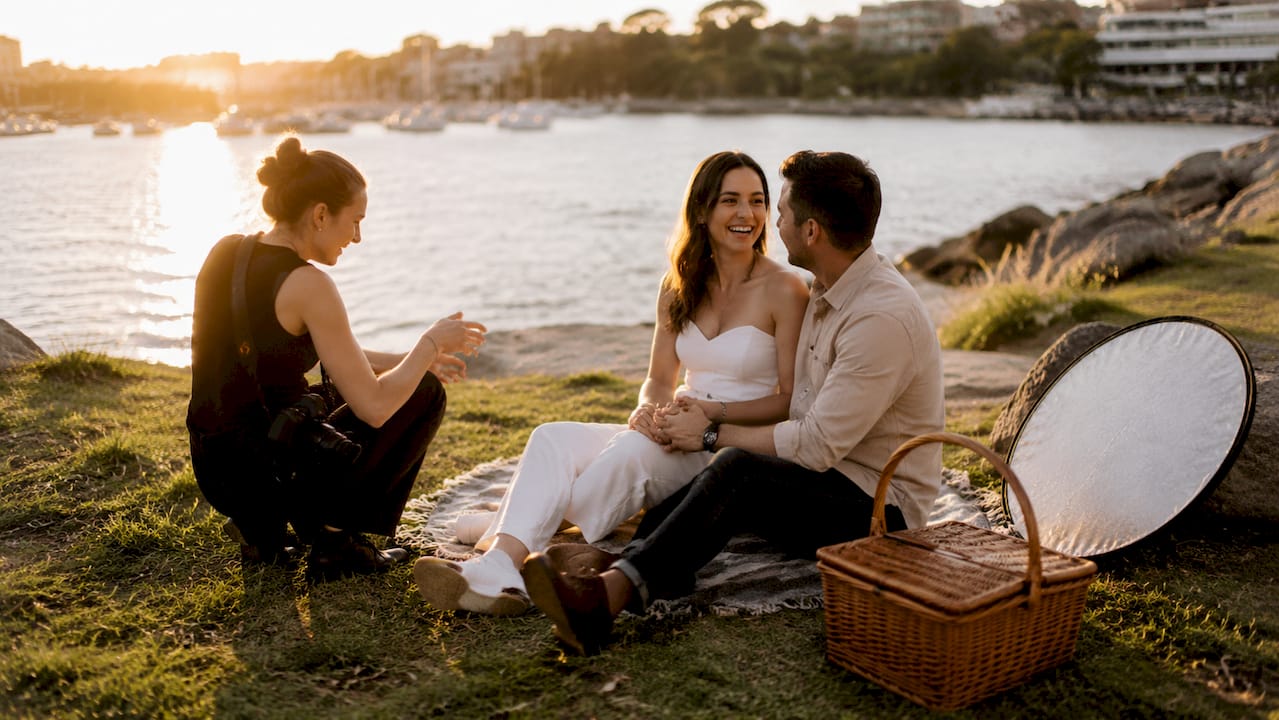
The practical result is striking. Couples who arrive at their wedding having already spent time in front of their photographer’s lens behave differently. They do not freeze when the camera appears. They do not glance at it nervously. They simply carry on being themselves, which is exactly what produces the photographs couples treasure for decades.
Pro Tip: Treat your engagement shoot as a relaxed introduction, not a performance. There are no wrong answers and no retakes. The more you forget the camera is there, the better your photos will be.
How does photographer communication affect client comfort?
The camera is only half the equation. The photographer’s behaviour during a session shapes how couples feel just as much as the lens itself. A 2026 study published in the International Journal of Libraries and Archives found that openness, empathy, and positivity from photographers significantly influence client satisfaction and emotional comfort during wedding photography.
Photographers who communicate with warmth and equality, treating couples as partners rather than subjects, create an environment where people relax quickly. That relaxation shows up directly in facial expressions and body language. A tense jaw and a forced smile disappear when someone feels genuinely at ease. An empathetic photographer notices discomfort early and adjusts, rather than pushing through an awkward pose.
Effective communication during an engagement shoot also builds trust that carries forward to the wedding day. Couples learn that their photographer will not put them in positions that feel unnatural. They learn the pace of the session, the tone of the direction, and the personality behind the camera. That knowledge removes uncertainty, and uncertainty is one of the biggest drivers of wedding day nerves.
Here is what good photographer communication looks like in practice, compared with what to avoid:
- Do: Name the awkwardness openly. Saying “I know this feels a bit odd at first” immediately lowers tension.
- Do: Use narrative prompts. Ask couples to whisper something that made them laugh recently, rather than simply saying “smile.”
- Do: Give specific, gentle direction. “Turn slightly towards each other” is clearer and kinder than “stand closer.”
- Don’t: Issue rapid-fire instructions. It creates pressure and makes couples feel they are failing.
- Don’t: Stay silent behind the camera for long stretches. Silence reads as disapproval.
- Don’t: Focus only on technical adjustments. Couples need to feel seen, not managed.
Pro Tip: If your photographer goes quiet for more than thirty seconds, it is fine to ask “How are we doing?” That small check-in resets the connection and reminds both of you that this is a conversation, not a test.
Why do engagement shoots lead to more natural wedding photos?
The most significant benefit of an engagement shoot is what it does to the wedding day itself. Familiarity with the photographer’s style reduces cognitive load, allowing couples to focus on each other rather than on what they are supposed to be doing. Less self-monitoring means more presence. More presence means photographs that feel like real moments rather than staged ones.
Photographer guides consistently describe the first 10–15 minutes of any shoot as the period where comfort develops gradually. On a wedding day, those first minutes are often the most photographed: the first look, the ceremony entrance, the portraits immediately after. Couples who have already moved through that initial awkward phase with their photographer arrive at those moments already warm and relaxed.
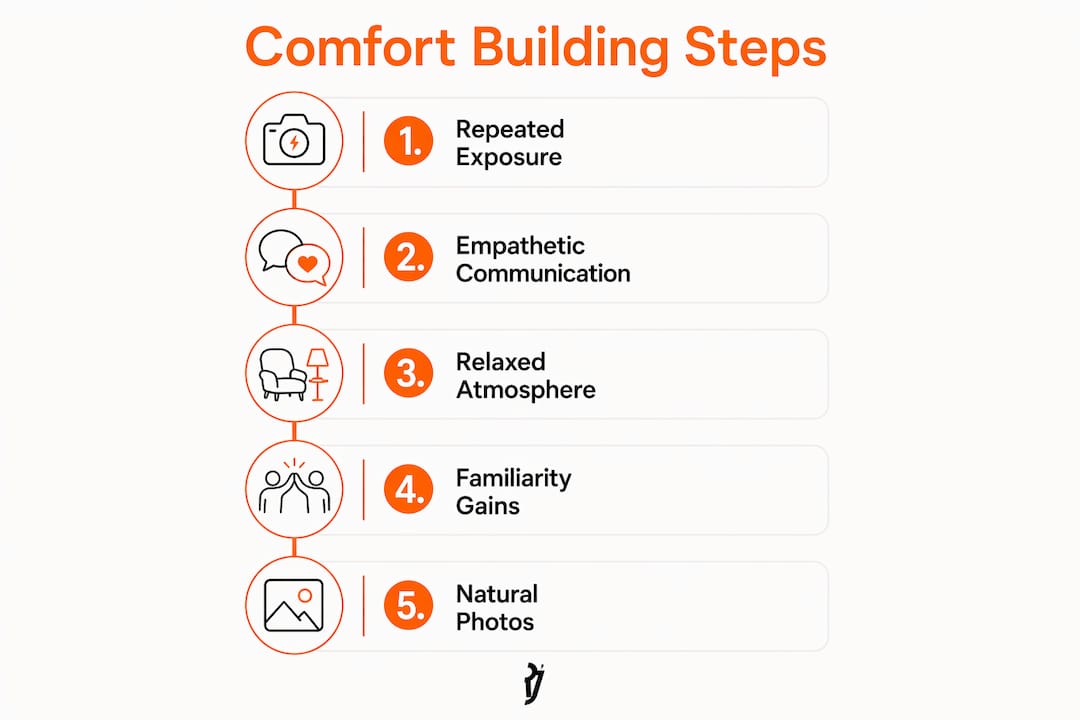
The shift from posing to connecting is the real outcome. Here is how engagement shoots produce that shift step by step:
- Couples learn the photographer’s pacing. They know whether the session moves quickly or slowly, which removes the anxiety of not knowing what comes next.
- Couples practise responding to prompts. Narrative tasks and gentle prompts replace stiff posing, and couples learn to respond naturally rather than freeze.
- Couples discover what feels comfortable. They find out which angles, distances, and interactions feel genuine, so they can return to those naturally on the wedding day.
- The photographer learns the couple’s dynamic. Every couple has a unique rhythm. Some are playful; some are tender and quiet. Knowing that rhythm in advance means the photographer captures the right moments instinctively.
- Awkwardness is processed in advance. The engagement session reduces common wedding photography mistakes by giving couples a chance to practise interaction styles and body language before the stakes are high.
The result is a wedding gallery full of photographs that look effortless. They look effortless because, by that point, they genuinely were.
Practical tips for couples and photographers to maximise comfort
Preparation before the engagement shoot matters as much as what happens during it. Selecting comfortable locations and outfits facilitates natural movement and reduces tension. A location that feels meaningful to the couple, a favourite park, a city street they walk regularly, or a spot tied to their relationship story, produces more relaxed and genuine photographs than a location chosen purely for aesthetics.
Mental preparation is equally useful. Couples who understand what to expect from a session arrive calmer. Reading about what a pre-wedding engagement shoot involves, or simply asking the photographer to walk through the plan beforehand, removes the fear of the unknown. Knowing that the first fifteen minutes will feel a little awkward, and that this is completely normal, makes those minutes far easier to move through.
The table below summarises the most effective approaches for both couples and photographers:
| Who | Do | Avoid |
|---|---|---|
| Couples | Wear clothes you feel genuinely comfortable in | Outfits chosen purely for appearance that restrict movement |
| Couples | Choose a location with personal meaning | Unfamiliar settings that feel performative |
| Couples | Ask questions before and during the session | Staying silent when something feels unnatural |
| Photographers | Use narrative prompts to spark real interaction | Issuing too many technical instructions at once |
| Photographers | Acknowledge initial awkwardness openly | Pretending discomfort is not happening |
| Photographers | Build in a relaxed warm-up period at the start | Jumping straight into formal portraits |
Pro Tip: Bring something that makes you both laugh. A shared joke, a silly prop, or even a favourite song playing quietly in the background gives you something real to react to, and real reactions make the best photographs.
Couples who treat the engagement shoot as a rehearsal, learning the photographer’s direction style and pacing, arrive at their wedding day with a clear advantage. The comfort transfer is partly psychological: knowing what it feels like to be photographed by the same person reduces self-consciousness and allows genuine presence. That presence is what separates a good wedding gallery from a truly memorable one.
Key takeaways
Engagement shoots reduce camera anxiety through habituation, build trust through empathetic communication, and produce more natural wedding photographs by giving couples and photographers a chance to connect before the big day.
| Point | Details |
|---|---|
| Habituation reduces anxiety | Repeated camera exposure lowers discomfort and behavioural change, producing more relaxed images. |
| Communication builds trust | Openness, empathy, and positivity from photographers significantly improve client comfort and satisfaction. |
| Familiarity reduces cognitive load | Knowing the photographer’s style lets couples focus on each other rather than on posing. |
| Preparation improves outcomes | Comfortable clothing, meaningful locations, and pre-session conversations all reduce tension. |
| Awkwardness is normal and temporary | The first 10–15 minutes of any shoot are the hardest; engagement shoots process that phase in advance. |
What I have learned from doing engagement shoots
Honestly, the couples who arrive most nervous often produce the most joyful photographs by the end of a session. I have seen it happen time and again. Someone walks in convinced they are “not photogenic,” and forty-five minutes later they are laughing so hard they have forgotten I am there. That is the moment I am always waiting for.
What surprises most couples is how quickly the awkwardness passes. The first few minutes can feel a little stilted, and I always name that out loud. Something like “Right, this is the bit where we all feel a bit weird” tends to get a genuine laugh, and that laugh breaks the ice better than any technical instruction ever could. From that point, the session finds its own rhythm.
Engagement shoots also teach me things about a couple that I carry into their wedding day. I learn whether they are the type to burst into laughter or go quiet and tender. I learn which one leads and which one follows. I learn the little glances they share. By the time the wedding arrives, I am not meeting them for the first time in a formal setting. I already know them. That changes everything about how I work and what I capture.
The couples who skip engagement shoots sometimes tell me afterwards that they wish they had not. Not because the wedding photos were poor, but because they spent the first hour of portraits still warming up. That warm-up time is precious on a wedding day. An engagement shoot spends it in advance, so the wedding day can be pure joy from the very first frame.
— Richard
Engagement and wedding photography with Richardjarmy
Richardjarmy puts comfort at the centre of every session. The approach is built around getting to know you properly before the wedding day, so that when the big moment arrives, you are relaxed, happy, and completely yourself.
An engagement shoot with Richardjarmy is a genuinely fun session in a location that means something to you. It is also the single best preparation you can do for your wedding photography. You will learn how Richard works, he will learn what makes you both smile, and your wedding gallery will be better for it. Take a look at the pre-wedding engagement shoot page to find out more about what a session involves and how to book.
FAQ
Why do couples feel nervous during engagement shoots?
Camera presence triggers discomfort and behavioural changes in a significant proportion of people, according to a 2026 Springer Nature meta-analysis. Engagement shoots reduce this through repeated, low-pressure exposure before the wedding day.
How long does it take to feel comfortable during a shoot?
Photographer guides consistently describe the first 10–15 minutes as the period where initial awkwardness fades. Naming the awkwardness openly and using narrative prompts speeds up that process considerably.
Do engagement photos reflect couple personality?
Yes. Once couples relax and stop self-monitoring, their genuine dynamic emerges naturally. The authentic expressions and interactions captured during engagement shoots reflect who the couple actually are, rather than how they think they should look.
What should couples wear to an engagement shoot?
Wear clothes you feel genuinely comfortable moving in. Comfortable outfits and meaningful locations reduce physical tension and help couples behave naturally, which directly improves photo quality.
Are engagement shoots worth it for camera-shy couples?
Engagement shoots are especially valuable for camera-shy couples. They provide a rehearsal that builds familiarity with the photographer’s style and pacing, reducing self-consciousness before the wedding day arrives.