
Commercial photography is defined as the creation of images specifically designed to promote, sell, or market a product, service, or brand. Unlike personal or fine art photography, every shot in a commercial context serves a direct business objective. Whether that is increasing sales, building brand awareness, or supporting an advertising campaign, the purpose is always practical. Tools like Adobe Lightroom and Capture One are standard in post-production, but the real work starts long before the shutter clicks. Professional commercial imagery can increase conversion rates by up to 30% and yield an average ROI of 4:1. That figure alone explains why businesses invest so heavily in getting it right.
What is commercial photography and how is it defined?
Commercial photography is any photography commissioned to support a business goal. The definition of commercial photography covers a wide spectrum, from a simple product packshot for an ecommerce listing to a full advertising campaign for a national brand. What unites all of it is intent. The image exists to do a job, not simply to be admired.
The purpose of commercial photography is to serve practical business aims rather than artistic expression. This means the photographer works closely with creative directors, marketing teams, and stylists to produce images that align with a brand’s visual identity and campaign goals. The creative vision matters, but it is always in service of the brief.
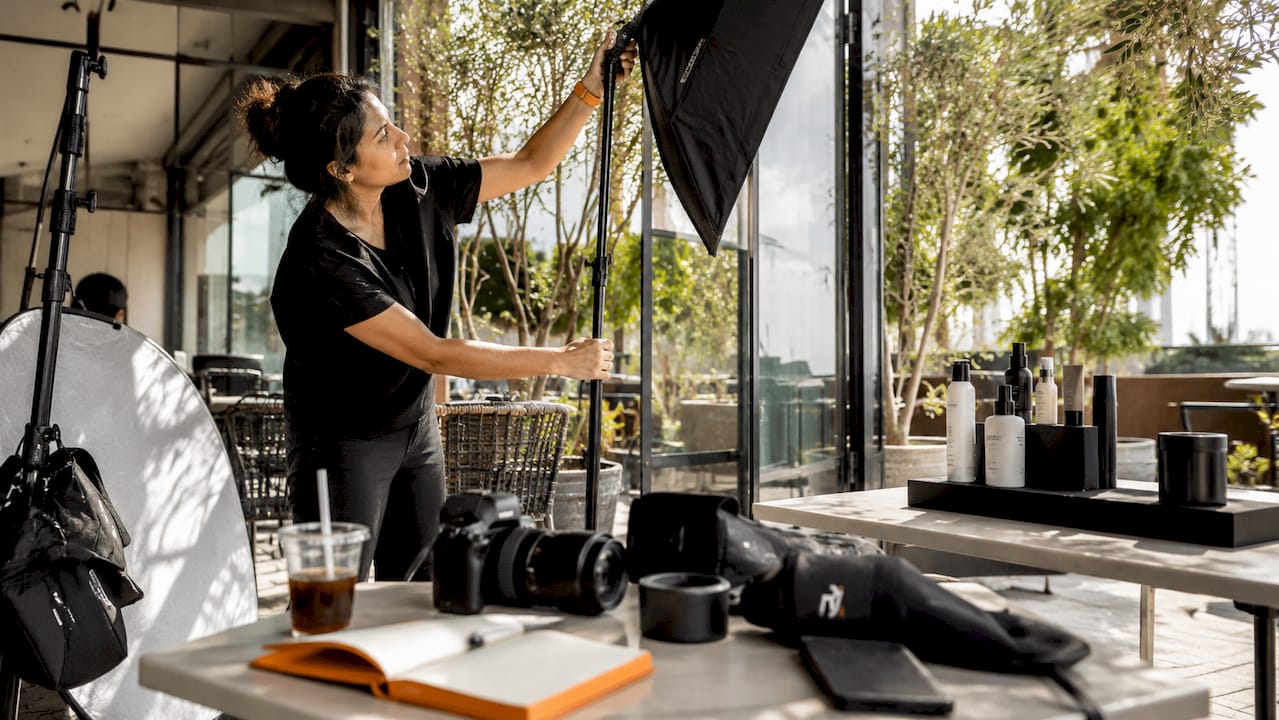
Named examples of commercial photography include product photography for retailers like ASOS, corporate headshots for professional services firms, food photography for restaurant chains, and advertising imagery for brands like Nike or Marks & Spencer. Each of these exists to drive a measurable outcome.
How does commercial photography differ from other genres?
The clearest distinction between commercial photography and other genres is purpose. Editorial photography, used in publications like The Guardian or Vogue, tells a story or illustrates a news piece. Fine art photography expresses the photographer’s personal vision. Personal photography captures private memories. Commercial photography does none of these things as its primary aim. It exists to sell or promote.
This difference in purpose creates real legal and practical consequences. Commercial usage requires model releases, property releases, and clear licensing agreements. Editorial use often does not. A portrait taken for a magazine feature operates under different rules than the same portrait used in an advertisement.
Here is a quick comparison to make the distinctions clear:
| Feature | Commercial photography | Editorial photography | Fine art photography |
|---|---|---|---|
| Primary purpose | Promote or sell | Inform or tell a story | Personal expression |
| Requires model release | Yes | Usually not | Depends on use |
| Client-driven brief | Always | Sometimes | Rarely |
| Licensing complexity | High | Moderate | Low |
| Typical output | Adverts, catalogues, websites | Magazines, news | Galleries, prints |
The stylistic flexibility in commercial photography is also worth noting. A commercial photographer might shoot clean, minimal product images one week and warm, lifestyle-driven portraits the next. The style follows the brand, not the photographer’s personal aesthetic.
What are the main types of commercial photography?
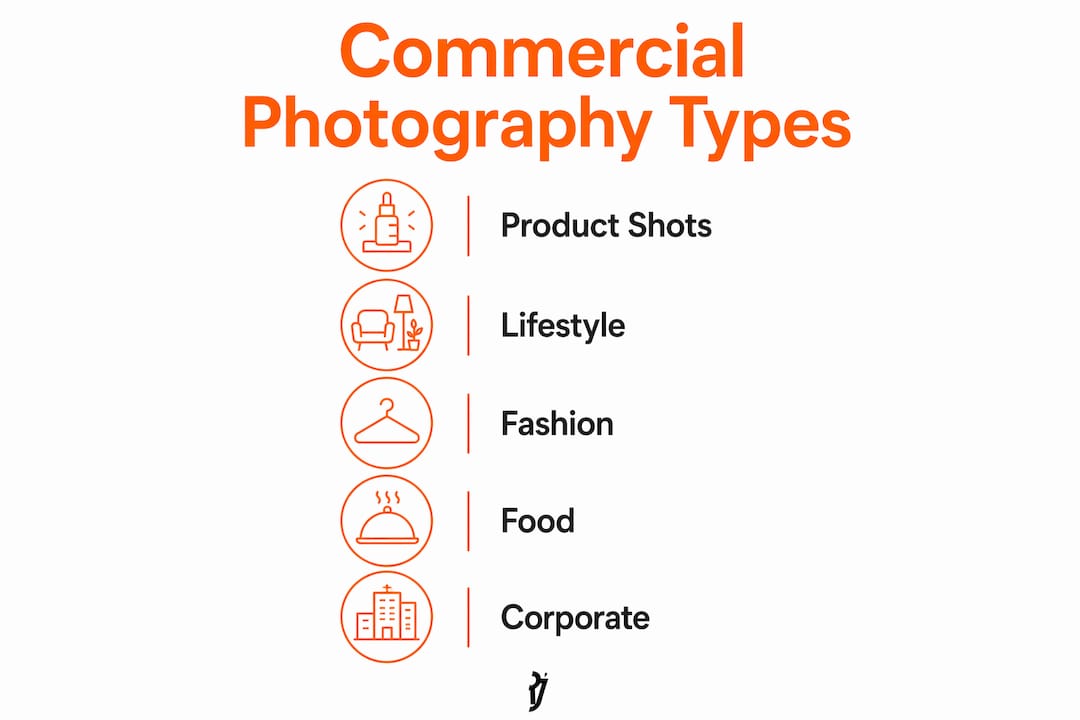
Commercial photography types include product packshots, lifestyle imagery, fashion photography, food photography, architectural photography, corporate portraits, and full advertising campaigns. Each serves a distinct function in a brand’s marketing mix.
Here is how the most common types work in practice:
- Product packshots. Clean, white-background images of individual products. Used on ecommerce sites, in catalogues, and on packaging. The goal is clarity and accuracy.
- Lifestyle photography. Products or services shown in real-world contexts. A sofa photographed in a styled living room, or a protein bar held by someone mid-run. These images build emotional connection and help customers picture themselves using the product.
- Fashion photography. Clothing and accessories shot on models or mannequins. Used by brands from high street retailers to luxury houses. The mood and styling communicate the brand’s identity as much as the garment itself.
- Food photography. Dishes and drinks styled and lit to look as appealing as possible. Used by restaurants, food brands, and delivery apps. Proper food styling is as important as the photography here.
- Corporate portraits and headshots. Professional images of staff, executives, and teams. Used on websites, LinkedIn profiles, and in press materials. These build trust and humanise a business.
- Architectural and property photography. Images of buildings, interiors, and spaces. Used by estate agents, architects, and hospitality brands to showcase spaces and attract clients.
Pro Tip: When planning a commercial shoot, leave copy space in your compositions. Designers need room to add headlines, logos, and calls to action. A beautiful image with no usable space is a missed opportunity.
Lifestyle photography deserves special attention because it is often underestimated. A product shot tells a customer what something looks like. A lifestyle shot tells them how it will make them feel. For brands selling experience or aspiration, that emotional layer is where the real marketing power lives.
Why does professional commercial photography benefit businesses?
Professional commercial photography is directly linked to increased business performance, with studies showing an average ROI of 4:1. That return comes from multiple directions: higher conversion rates on product pages, stronger brand perception, and more effective advertising spend.
The reason professional images outperform amateur ones is not purely technical. It comes down to trust. When a customer lands on a website or sees an advert, image quality signals the quality of the business behind it. Poor photography suggests a lack of care. Strong photography communicates confidence and professionalism.
Commercial photographers work with creative directors and stylists to produce images that are built for marketing impact, not just aesthetic appeal. This collaboration is what separates a technically competent photograph from one that actually moves a customer to act.
Pro Tip: When hiring a commercial photographer, ask to see work from briefs similar to yours. A strong portfolio in food photography does not automatically translate to great corporate portraiture. Specialisation matters.
Strategic planning is baked into every good commercial shoot. Lighting is matched to brand colours. Compositions are designed with end use in mind. Shoot planning includes leaving space for graphic text and aligning the visual tone with the brand’s guidelines. This level of foresight is what makes commercial photography a business tool, not just a creative exercise.
What legal considerations apply to commercial photography?
Commercial photography is legally defined by its use, not its style. An image becomes commercial the moment it is used to promote or advertise, regardless of how it was originally shot. This distinction matters enormously for both photographers and the businesses that commission them.
The legal framework around commercial photography covers three main areas: licensing, model releases, and property releases.
Licensing defines what a client can do with an image. Ownership of the copyright typically stays with the photographer unless explicitly transferred in a contract. A licence grants the client the right to use the image in specific ways, for a specific period, and in specific territories. Exclusivity costs more because it prevents the photographer from licensing the same image elsewhere.
Clear contracts minimise copyright disputes and liability for both parties. Without a written agreement, misunderstandings about usage rights are almost inevitable.
Here are the key legal best practices for commercial photography:
- Always use a written contract that specifies usage rights, territories, duration, and exclusivity.
- Obtain signed model release forms from every identifiable person in a commercial image.
- Secure property releases for recognisable private buildings, artworks, or branded locations.
- Clarify copyright ownership upfront. Assume the photographer retains copyright unless the contract states otherwise.
- Review licensing terms before repurposing images for new campaigns or channels not covered in the original agreement.
Model releases are legally required to use images commercially, protecting against misappropriation claims and statutory damages. Skipping this step is one of the most common and costly mistakes businesses make. A single unlicensed use of a person’s likeness in an advertisement can result in significant legal liability.
The commercial designation hinges on function, not aesthetics. A candid street photograph used in an advertising campaign requires the same legal protections as a studio product shot. The moment the image serves a commercial purpose, the rules apply.
Key takeaways
Commercial photography is the practice of creating images with a defined business purpose, and its legal, strategic, and creative dimensions are all equally important to get right.
| Point | Details |
|---|---|
| Definition is purpose-driven | Commercial photography is defined by its business intent, not its style or technical approach. |
| Legal compliance is non-negotiable | Model releases, property releases, and clear licensing contracts protect both photographer and client. |
| Types serve different goals | Product, lifestyle, fashion, food, and corporate photography each support distinct stages of the customer journey. |
| ROI is measurable | Professional commercial imagery is linked to conversion rate increases of up to 30% and an average ROI of 4:1. |
| Planning drives results | Strategic shoot planning, including copy space and brand-aligned lighting, is what separates good images from effective ones. |
Why I think most businesses underestimate commercial photography
I have spent years working with clients who come to me thinking commercial photography is just about taking nice pictures. It is not. It is about visual problem-solving that meets a marketing need. The technical skills matter, but they are the starting point, not the finish line.
What I find most interesting is how often the legal side catches people off guard. Businesses spend thousands on a shoot and then discover they cannot use the images the way they planned because the licensing terms were never properly discussed. That is a painful and entirely avoidable situation.
The other thing I see regularly is businesses treating commercial photography as a one-off expense rather than a long-term asset. A well-planned shoot produces images that work across your website, social channels, printed materials, and advertising for years. When you think about it that way, the investment looks very different.
My honest advice is to treat your photographer as a creative partner, not a supplier. Share your marketing goals, your brand guidelines, and your campaign plans before the shoot. The more context a photographer has, the more useful the images will be. That collaboration is where the real value gets created.
— Richard
How Richardjarmy can support your commercial photography
If you are a business looking for photography that genuinely works hard for your brand, Richardjarmy brings warmth, precision, and real marketing awareness to every shoot. Whether you need images for a property listing, a corporate campaign, or a product launch, the approach is always the same: understand the brief, plan the shoot carefully, and create images that make people smile and take action.
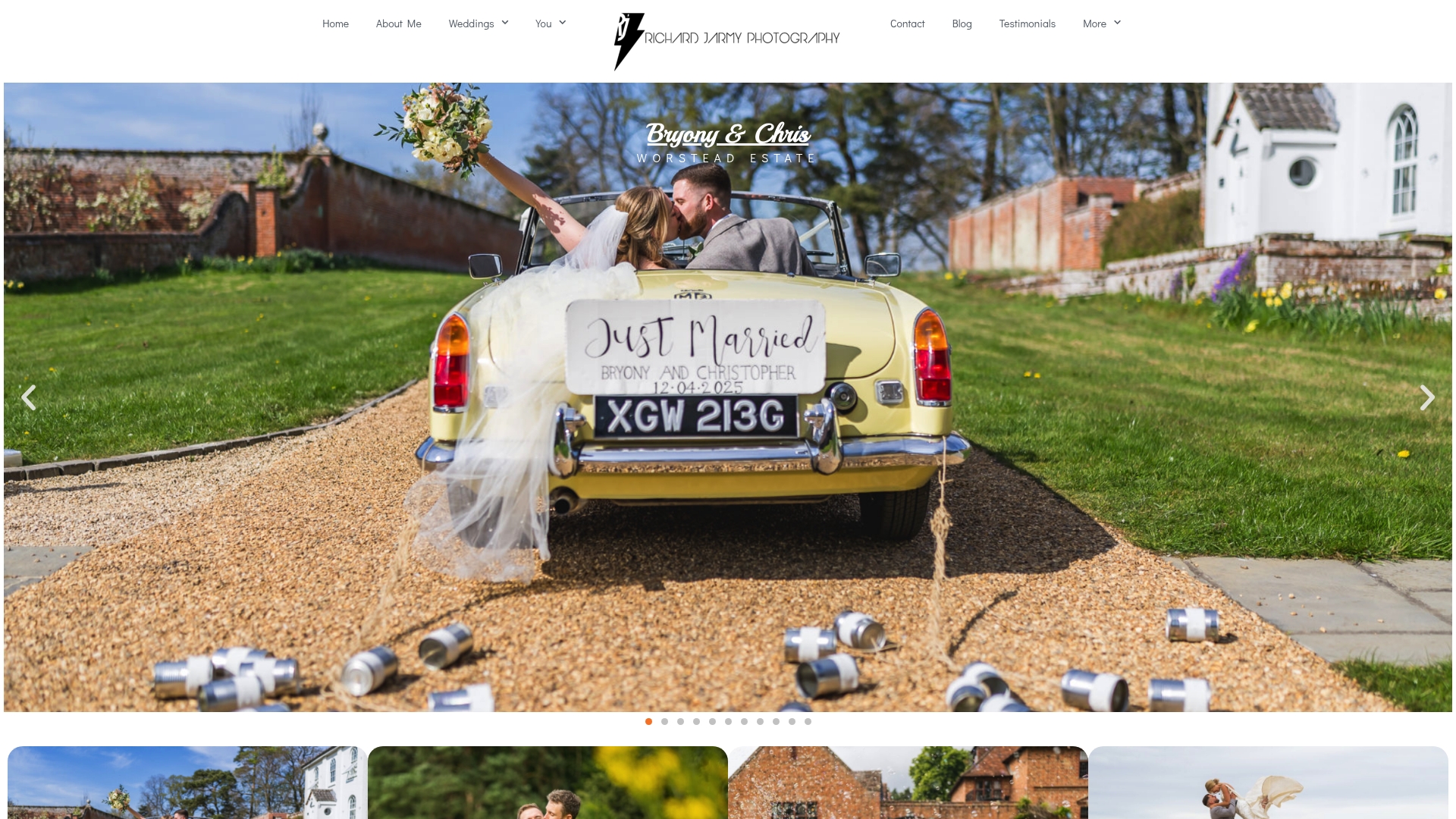
Richardjarmy’s commercial photography services are built around your business goals, not just your brief. From corporate portraits to property showcases, every image is planned with your end use in mind. Take a look at the property photography work to see how professional imagery can transform the way a space is presented and sold. Get in touch to talk through what you need and how we can make it happen.
FAQ
What is the definition of commercial photography?
Commercial photography is the creation of images specifically intended to promote, sell, or market a product, service, or brand. The defining factor is purpose: any image used for advertising or promotion is classified as commercial, regardless of its original context.
What do commercial photographers do?
Commercial photographers plan and execute shoots that meet specific business and marketing objectives. They work with creative directors, stylists, and marketing teams to produce images aligned with brand guidelines and campaign goals.
What types of commercial photography are most common?
The most common types include product packshots, lifestyle photography, fashion photography, food photography, corporate portraits, and architectural photography. Each type serves a different function in a brand’s marketing strategy.
Do commercial photographs require model releases?
Yes. Model releases are legally required for any image used commercially that features an identifiable person. Without a signed release, using the image in advertising or promotion exposes both the photographer and the client to legal liability.
How does commercial photography differ from editorial photography?
Commercial photography is created to promote or sell, while editorial photography is created to inform or tell a story. Commercial use requires model and property releases and detailed licensing agreements; editorial use typically does not.