
A proposal photography session is a discreet, professional photo shoot designed to capture the authentic surprise and emotion of a marriage proposal as it unfolds naturally. Known in the industry as proposal photography or engagement event photography, these sessions combine photojournalistic skill with portrait technique to document one of the most unrepeatable moments in a couple’s life. Richard Jarmy specialises in exactly this kind of joyful, candid storytelling, building genuine rapport with couples before the shutter ever clicks. The result is a set of images that feel real, warm, and full of life.
What is a proposal photography session and how does it work?
A proposal photography session is a specialised photo shoot that blends photojournalism and portraiture to capture a marriage proposal without staging or interruption. The photographer works covertly, often arriving at the location well before the couple, and documents the moment from a hidden position. The session covers everything from the nervous lead-up to the ring reveal and the raw emotional reaction that follows.
What makes this type of photography genuinely high stakes is that the moment cannot be recreated. There is no second take if the photographer misses the exact second of the proposal. That pressure demands both technical skill and a calm, prepared approach.
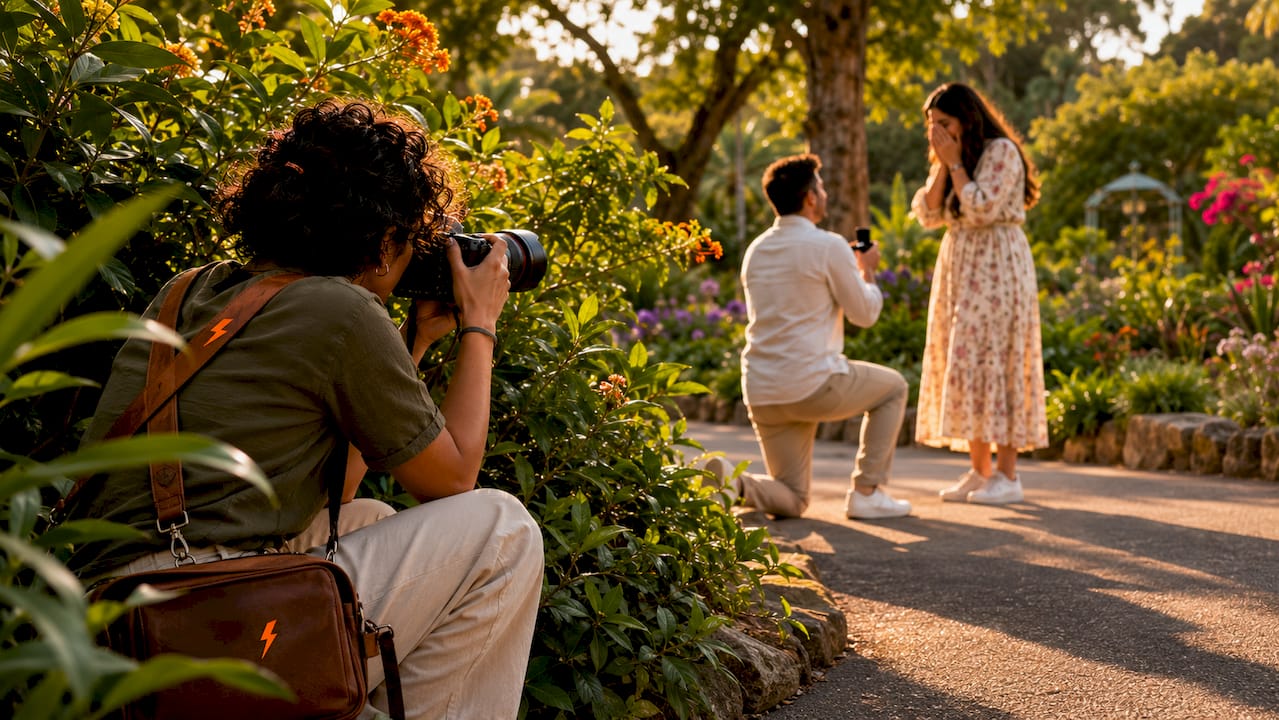
Richard Jarmy’s method centres on building comfort and trust with the proposer well before the session. That preparation means the photographer understands the couple’s personalities, the planned location, and the emotional tone of the moment. The images that result feel personal because the groundwork was laid long before the big question was asked.
How do photographers plan and prepare for a proposal session?
Thorough preparation separates a successful proposal shoot from a missed opportunity. The planning process typically follows these steps:
-
Scout the location at the exact time of day. Shifting light and crowd density change dramatically between morning and sunset. A quiet garden at noon can be packed with visitors by early evening.
-
Confirm the exact proposal spot and timeline. The photographer needs to know precisely where the proposer will stand, which direction they will face, and the approximate time the question will be asked.
-
Agree on a communication signal. A subtle cue, such as a text message or a pre-arranged gesture, tells the photographer when to begin shooting without alerting the partner.
-
Choose the right lens and distance. Photographers typically position themselves 25 to 50 feet away using a telephoto lens, commonly a 70–200mm, to stay completely hidden while still capturing sharp, emotionally rich images.
-
Plan multiple shooting angles and escape routes. If a crowd gathers or the light shifts unexpectedly, the photographer needs a backup position ready to move to without disrupting the moment.
-
Scout for environmental hazards. Dynamic conditions such as changing light, unexpected crowds, and sudden interruptions require photographers to visit locations more than once before the session.
Pro Tip: Ask your photographer to walk the exact route you plan to take with your partner. Knowing where you will pause, turn, and stop gives the photographer a clear mental map and removes guesswork on the day.
What styles and techniques do proposal photographers use?
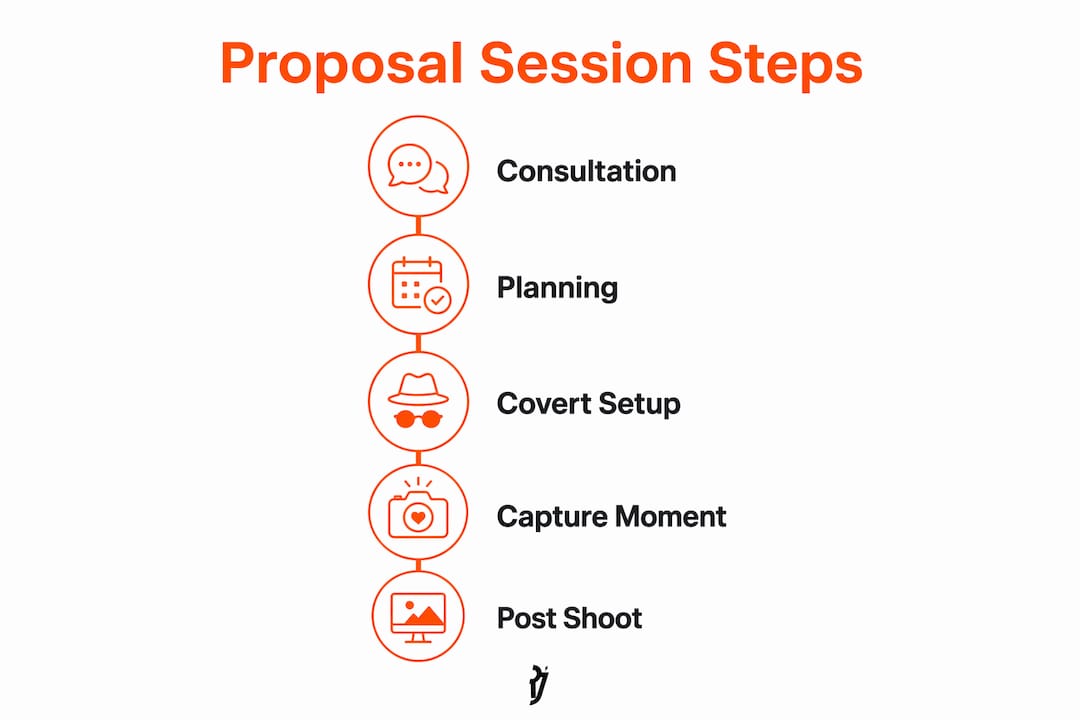
The photojournalistic style is the foundation of great proposal photography. It means the photographer observes and captures rather than directs. Authentic emotion is the goal, not a perfectly arranged pose.
The key techniques used across a session include:
- Burst mode shooting. The camera fires multiple frames per second during the proposal itself, giving the photographer the best chance of catching the decisive moment, whether that is the gasp, the tears, or the wide smile.
- Capturing the three core moments. Three moments define every proposal shoot: the lead-up (nervous energy, the walk, the pause), the kneeling moment, and the immediate post-proposal reaction.
- Balancing natural light. Photographers choose positions that use available light to their advantage, avoiding harsh shadows on faces and making use of golden hour warmth where possible.
- Post-proposal portraits. Once the moment has passed and the couple knows the photographer is there, relaxed and happy portraits follow naturally. These feel genuine because the emotion is still fresh.
- Detail shots. Ring and hand close-ups taken after the proposal are consistently among the most treasured images from any session. They capture the ring in ideal light with real emotional context surrounding it.
Pro Tip: Do not worry about looking at the camera during the proposal itself. The best images come from couples who are completely absorbed in each other. The photographer will guide you into relaxed portraits afterwards.
The style that suits a couple depends on their personalities and setting. A candid, documentary approach works beautifully in busy city locations or scenic outdoor spots. Couples who want a slightly more polished look can blend photojournalism with gentle portrait direction after the proposal moment has passed.
Why is hiring a specialist proposal photographer worthwhile?
The emotional value of professional proposal photography is difficult to overstate. These are moments that happen once. A friend with a phone camera, however well-intentioned, cannot replicate the technical skill or the invisible presence of a trained photographer.
The practical benefits are clear:
- Invisibility. A professional knows how to blend into the environment. They position themselves naturally, dress appropriately for the setting, and move without drawing attention.
- Technical quality. Low light, distance, and fast-moving emotion all challenge amateur equipment. A specialist photographer uses the right gear to produce sharp, well-exposed images regardless of conditions.
- Authentic storytelling over staged photos. Professionals understand that presence over perfection produces the most meaningful images. Forcing poses or over-directing couples leads to images that feel hollow.
- Coverage of the emotional aftermath. The 30–60 minutes after the proposal often contain the most emotionally charged images of the entire session. Phone calls to family, laughter, happy tears, and spontaneous celebrations all happen in this window.
- Lasting keepsakes. Printed albums, framed images, and digital galleries from a professional session become physical memories that couples return to for decades.
Booking a photographer who has specific experience with proposal shoots matters. The skills required differ from standard portrait or wedding photography. The ability to read a scene, anticipate emotion, and remain completely undetected is a craft in itself. Richard Jarmy’s fun and candid approach to event photography translates directly into proposal sessions that feel alive and joyful rather than stiff or contrived.
How can couples plan their ideal proposal photography session?
Planning a proposal session is simpler than most couples expect. The key is clear communication with your photographer from the very start.
- Choose a meaningful location. The best locations for proposal photos are places that matter to you as a couple: where you had your first date, a favourite park, a scenic viewpoint, or a city street that holds a memory. Meaning adds depth to the images.
- Consider timing carefully. Early morning and the hour before sunset offer the softest, most flattering light. Midday sun creates harsh shadows and is best avoided for outdoor sessions.
- Coordinate outfits without over-thinking them. Complementary colours photograph well together. Avoid very busy patterns or logos that distract from faces and emotion. Comfort matters too: if you feel awkward in what you are wearing, it will show.
- Decide on surprise versus planned reveal. Some couples prefer a complete surprise for the partner being proposed to. Others choose a semi-planned approach where both partners know a shoot is happening but the proposal itself remains a surprise. Both work beautifully.
- Share props or personal details with your photographer. A meaningful book, a favourite flower, or a location tied to your story all add layers to the images.
- Trust your photographer’s instincts. Effective communication about timing, location, and signals is the foundation of a successful session. Once that groundwork is in place, let the photographer do their job.
Pro Tip: Book your proposal photographer at least four to six weeks in advance. Popular locations and dates fill quickly, and your photographer will need time to scout the venue and plan the session properly.
Building rapport with your photographer before the day also makes a real difference. Richard Jarmy’s approach to engagement shoots and pre-wedding sessions is built around exactly this idea: the more comfortable you feel with the person behind the camera, the more natural and happy your images will look.
Key takeaways
A proposal photography session is most successful when a specialist photographer combines covert positioning, photojournalistic technique, and thorough location preparation to capture genuine, unrepeatable emotion.
| Point | Details |
|---|---|
| Definition | A proposal session is a discreet shoot capturing the surprise and emotion of a marriage proposal as it happens. |
| Preparation is everything | Scout the location at the planned time of day and agree on clear communication signals with your photographer. |
| Three moments matter most | Focus on the lead-up, the kneeling, and the immediate reaction for the most emotionally powerful images. |
| The aftermath is gold | The 30–60 minutes after the proposal often produce the most joyful and memorable images of the entire session. |
| Choose a specialist | A photographer experienced in proposal shoots brings invisibility, technical skill, and emotional awareness that general photographers cannot replicate. |
What I have learned from shooting proposals
Every proposal I photograph teaches me something new about the gap between what people expect and what actually happens. Couples often tell me they are most nervous about the moment itself. What surprises them every time is how much emotion spills out in the minutes after the question is answered.
I have photographed proposals where the partner being proposed to laughed so hard they could barely speak. I have captured the quiet, trembling moment where someone simply holds their new fiancé’s face and says nothing at all. Those are the images that end up framed on walls. Not the ring shot, not the posed portrait. The unguarded, unscripted seconds that nobody planned for.
My advice is always the same: trust the process and stay present. The photographer’s job is to worry about the light, the angle, and the timing. Your job is to be completely there with your partner. The more you let go of trying to look good for the camera, the better your images will be. Authenticity is not something you can fake, and it is not something you need to perform. It just happens when you stop thinking about it.
If you are planning a proposal, please do not treat the photography as an afterthought. Book someone whose work genuinely makes you smile. Look at their images and ask yourself: do these feel real? Do these people look happy? That is the standard worth holding out for.
— Richard Jarmy
Proposal and engagement photography with Richard Jarmy
Richard Jarmy Photography is built around one simple idea: capturing the moments that make you smile, without making you feel like you are performing for a camera.
Whether you are planning a surprise proposal or a relaxed engagement shoot, Richard brings warmth, discretion, and genuine enthusiasm to every session. His wedding photography services extend naturally into proposal and pre-wedding shoots, giving couples a consistent, trusted photographer from the very first question to the last dance. Get in touch to talk through your plans and find out how Richard can help you capture the moments that matter most.
FAQ
What is a proposal photography session?
A proposal photography session is a professional, discreet photo shoot where a photographer covertly captures the moment of a marriage proposal, including the lead-up, the question, and the emotional reaction that follows.
How long is a proposal photography session?
Most proposal sessions last between one and two hours, covering the proposal itself and the emotional aftermath. The 30–60 minutes after the proposal often produce the most memorable images, so it is worth planning for extra time.
What are the best locations for proposal photos?
Meaningful locations work best: a favourite park, a scenic viewpoint, a city landmark, or anywhere that holds significance for the couple. Photographers recommend visiting the spot at the planned time of day to assess light and crowd levels.
What should couples wear for a proposal photography session?
Complementary, comfortable outfits in solid or subtly patterned colours photograph well. Avoid busy logos or very bright patterns that draw attention away from faces and emotion.
Do both partners need to know about the proposal photography session?
No. Most proposal sessions are arranged entirely by the proposer, with the partner being completely unaware a photographer is present. Clear communication between the proposer and the photographer replaces any need to involve the partner in advance.