
Props for engagement photoshoots are carefully chosen items that add personality, context, and visual interest to your photos, making your love story uniquely memorable. In professional photography, these items are often called session accessories or narrative props, and the best ones do far more than fill a frame. They give you something to do with your hands, spark genuine laughter, and create the kind of natural, relaxed moments that no amount of posing can manufacture. The right prop turns a good session into something extraordinary, and the wrong one turns it into a catalogue shoot. This guide shows you exactly how to choose, prepare, and use props so your photos feel like you.
How to choose meaningful props for your engagement photoshoot
The best props come from your actual life together. Start by listing your shared hobbies, favourite places, and the small rituals that define your relationship. A couple who met at a bookshop might bring a worn paperback. Keen hikers might incorporate a trail map or a flask. These details make photos tell a story rather than simply record a moment.
Your location shapes your prop choices as much as your personality does. A woodland setting already offers texture, light, and depth, so you need fewer additions. An urban backdrop calls for props with stronger visual presence, such as a bold floral arrangement or a personalised sign. Think of props as conversation between you and your surroundings, not decoration placed on top of them.
Choose props that encourage movement and interaction rather than static holding. A bottle of champagne prompts a toast and a laugh. A blanket invites you to sit close and wrap yourselves up. Interactive props alleviate awkwardness and produce more genuine expressions than anything you could consciously arrange on your face.
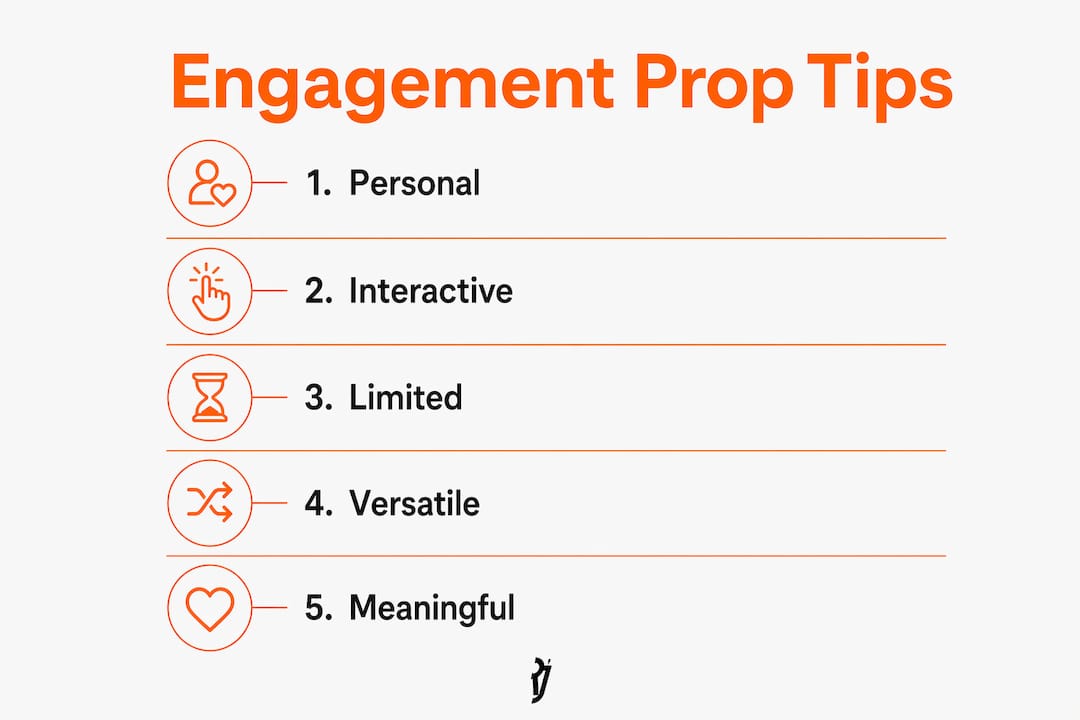
- Reflect your story. Pick items tied to a shared memory, hobby, or milestone.
- Match your location. Busy backgrounds need simple props; minimal settings can handle bolder ones.
- Limit your selection. Three to five well-chosen props is the recommended maximum to keep focus on you as a couple.
- Coordinate with your wardrobe. Props that complement your colours and textures create visual harmony rather than distraction.
- Prioritise interaction. If a prop does not give you something to do together, reconsider it.
Pro Tip: Build a simple mood board before your shoot. Collect images of your chosen location, your outfits, and your props side by side. If they clash on screen, they will clash in the photos.
What props work best in most engagement photoshoots?
Certain props earn their place in session after session because they are versatile, personal, and genuinely useful on the day. The following items consistently produce warm, natural results across a wide range of styles and settings.
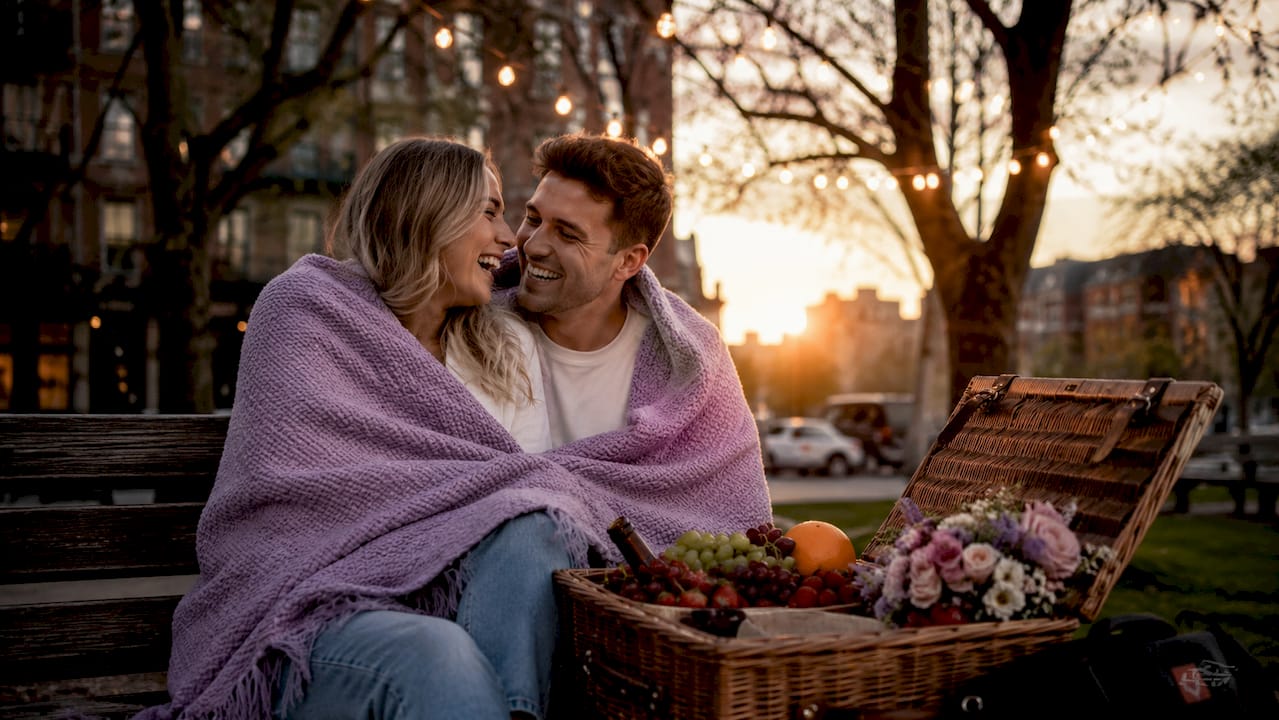
Textured blankets and throws are among the most practical props you can bring. Photographers recommend them because they provide warmth outdoors and reduce stiffness, which shows up directly in your expressions. A chunky knit throw in a neutral tone works beautifully against autumn leaves or a stone wall. Wrap it around your shoulders together and you have an instant, natural pose.
Personalised signs and chalkboards add a layer of meaning that generic props cannot. A hand-lettered board showing your engagement date or a phrase that only the two of you understand acts as a conversation starter within the image itself. Keep the lettering clean and the message short so it reads clearly in the final print.
Floral arrangements bring colour, softness, and a natural connection to wedding imagery. Choose blooms that match your wedding palette if you have one, or simply pick flowers you both love. Loose, garden-style arrangements photograph better than tight, formal bouquets because they move with you.
Vintage or Polaroid cameras work as playful, nostalgic props that give you a natural activity. Pretending to photograph each other produces genuine smiles and eye contact. They also photograph beautifully in their own right, adding a warm, retro texture to the frame.
Fairy lights and string lights create a magical warm glow that works in both daylight and low light. Drape them loosely between your hands or hang them from a branch above you. They are particularly effective at dusk when the ambient light drops and the bulbs begin to shine.
Champagne or your favourite drink adds a celebratory atmosphere and gives you something to clink, sip, and laugh over. Choose a drink you actually enjoy. The genuine pleasure of it comes through in the photos.
Pro Tip: Avoid props that are purely decorative and give you nothing to do. The best props are ones you interact with, because interaction produces movement, and movement produces life in a photograph.
Step-by-step guide to preparing props for your shoot
Good preparation means your props enhance the session rather than slow it down. Follow this sequence to arrive on the day feeling organised and relaxed.
-
Build your engagement shoot checklist. Write down every prop you plan to bring, including its size, weight, and any special handling it needs. A checklist stops you forgetting items and helps you pack efficiently.
-
Share your ideas with your photographer beforehand. Communicating prop ideas early prevents awkward posing and wasted shoot time. Your photographer can advise on what will work in your chosen location and what to leave at home.
-
Plan the order in which you introduce each prop. Start with the most relaxed, low-effort props and build towards anything that requires more staging. This keeps the session flowing naturally and stops you feeling rushed.
-
Use props to prompt movement, not freeze it. Ask yourselves what you would naturally do with each item. Spin with the blanket. Pour the champagne. Hold the sign up together and then dissolve into laughter. Natural movement yields more dynamic photos than static holding.
-
Limit active props to one or two at a time. Bringing everything out at once creates clutter and confusion. Rotate props through the session so each one gets its own moment.
-
Have a backup plan. Outdoor shoots are subject to wind, rain, and uneven ground. If a prop is not working, set it aside without stress. Your photographer will have ideas to fill the gap, and the best moments often happen when the plan changes.
Pro Tip: Pack your props in a dedicated bag separate from your personal belongings. Label it clearly so your photographer or a friend can hand items over quickly without interrupting the flow of the session.
Common mistakes to avoid when using props in engagement photography
Props go wrong in predictable ways. Knowing the pitfalls in advance means you can sidestep them entirely.
- Bringing too many props. Three to five items is the practical limit. Beyond that, you spend more time managing props than connecting with each other, and the photos show it.
- Choosing props that overshadow you. A prop should complement the couple, not compete with them. If the first thing you notice in a photo is the prop rather than the people, it is too dominant.
- Ignoring practical outdoor conditions. Wind topples signs, rain damages paper, and cold hands make holding props uncomfortable. Check the forecast and choose props that can handle your environment.
- Skipping wardrobe coordination. Props that clash with your outfits create visual dissonance that no amount of editing can fully correct. Lay everything out together before the shoot day.
- Choosing gimmicky or clichéd items. Simple, personal props produce timeless photos that age well. Novelty items tend to date quickly and can undermine the emotional tone of the images.
- Forgetting to tell your photographer. Surprises on shoot day rarely help. Share every prop idea in advance so your photographer can plan shots around them.
The single biggest mistake is prioritising props over presence. Spontaneity and genuine connection always produce better photos than the most carefully curated collection of accessories.
Key takeaways
The most effective props for an engagement photoshoot are personal, interactive, and limited to three to five items that complement your wardrobe, location, and story.
| Point | Details |
|---|---|
| Choose personal props | Select items tied to shared memories or hobbies for authentic storytelling. |
| Limit your selection | Three to five props maximum keeps focus on the couple, not the accessories. |
| Communicate with your photographer | Share prop ideas before the shoot to prevent awkward posing and wasted time. |
| Prioritise interaction | Props that give you something to do together produce natural movement and genuine expressions. |
| Coordinate everything | Match prop colours and textures to your outfits and location for visual harmony. |
What I have learned about props after years behind the lens
I will be honest with you: the couples who arrive with a single meaningful prop almost always produce better photos than those who bring a car boot full of ideas. That is not a criticism of enthusiasm. It is just what I have seen, session after session.
The props that work best are the ones that make a couple forget I am there. A blanket they wrap around themselves because they are genuinely a bit cold. A bottle of fizz they open because they are actually celebrating. A book one of them loves and the other pretends to read. These moments are not staged. They are real, and the camera knows the difference.
I have also learned that props are most powerful when they are introduced quietly, without announcement. If I hand a couple a bunch of flowers and say “right, now hold these,” the result is a photo of two people holding flowers. If I leave the flowers on a wall nearby and let one of them pick them up naturally, the result is something else entirely. That is the difference between a prop as a tool and a prop as a prompt.
My advice is to think of your props as conversation starters rather than set dressing. Bring the things that make you smile when you look at them. Leave behind anything you chose because you saw it in someone else’s photos. Your engagement shoot should look like you, not like a mood board you found online.
— Richard Jarmy
How Richard Jarmy Photography brings props to life
Richard Jarmy Photography is built around one idea: that the best photos happen when couples feel genuinely happy and at ease. Props are one of the tools that make that possible, and Richard works with you before every session to understand which items will suit your personalities, your location, and your story.
Whether you are planning a relaxed countryside session with a cosy blanket and a flask of tea, or a golden-hour urban shoot with fairy lights and champagne, Richard’s fun, candid approach means the props become part of your story rather than a distraction from it. You can also explore the full range of engagement and wedding photography sessions to find the style that feels right for you. Get in touch to start planning a shoot that is genuinely, joyfully yours.
FAQ
What are the best props for an engagement photoshoot?
The best props are personal, interactive, and limited to three to five items. Textured blankets, personalised signs, floral arrangements, fairy lights, and champagne consistently produce warm and natural results across a wide range of settings.
How many props should I bring to my engagement shoot?
Bring no more than three to five props. Overloading a session with accessories distracts from the couple’s connection and creates visual clutter in the final images.
Should I tell my photographer about my props in advance?
Yes. Sharing your prop ideas before the shoot helps your photographer plan shots around them and prevents awkward posing or wasted session time.
Do props work for outdoor engagement shoots?
Props work well outdoors when chosen with the conditions in mind. Textured blankets add warmth and encourage natural poses, while fairy lights perform particularly well at dusk. Avoid paper signs or fragile items on windy days.
How do props help couples feel more relaxed during a shoot?
Interactive props give couples something to do together, which reduces self-consciousness and produces more genuine expressions. Laughing over a champagne pour or wrapping up in a blanket together creates the kind of candid moments that posed shots rarely achieve.