
Fine art wedding photography is a curated, print-first approach that prioritises clean composition, intentional light, and a cohesive visual style across every image from your wedding day. Unlike documentary or traditional styles, it treats each frame as a deliberate artistic choice rather than a reactive capture. The result is a collection of images that feel as beautiful hanging on a wall as they do in an album. If you are exploring photography styles for your wedding and want pictures that genuinely look like art, this guide will help you understand exactly what the style involves, how it differs from other approaches, and how to find the right photographer for your vision.
What is fine art wedding photography, and what makes it distinct?
Fine art wedding photography is defined by controlling composition and light in-camera before the shutter is pressed. That single principle separates it from almost every other wedding photography style. Post-production can refine an image, but it cannot rescue a cluttered frame or fix poorly managed light. The discipline begins the moment the photographer looks through the viewfinder.
The industry term you will also hear is “artistic wedding photography,” and the two phrases describe the same core approach. Both refer to a style where the photographer brings a painter’s eye to every scene, considering background, edges, and tonal balance before capturing the moment. The print-first mindset is the clearest way to understand it. Every image is curated to look exceptional as a physical keepsake, not just a digital file.
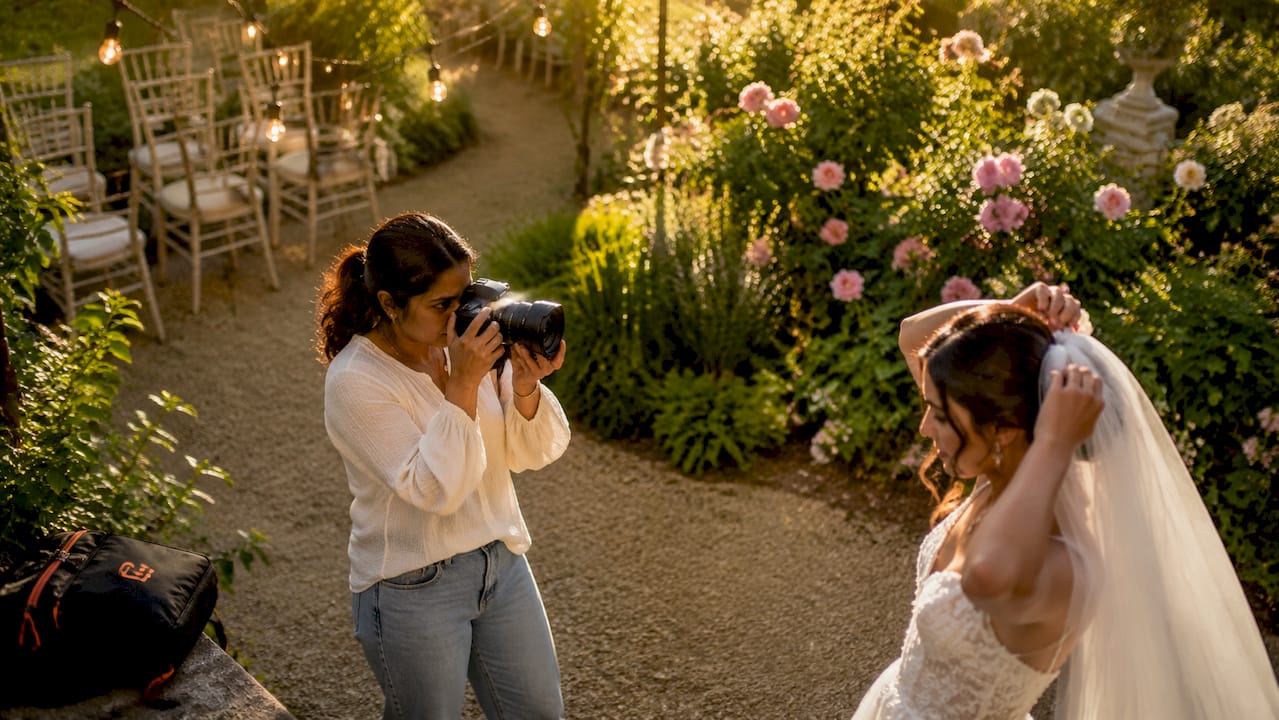
Fine art photography also delivers a consistently cohesive visual voice across the full day. That means the getting-ready shots, the ceremony, the portraits, and the reception all share the same tonal palette, light quality, and compositional grammar. Consistency is the proof of genuine fine art practice. A single beautiful image proves nothing. A full gallery of beautiful images proves everything.
What key techniques define the fine art wedding photography style?
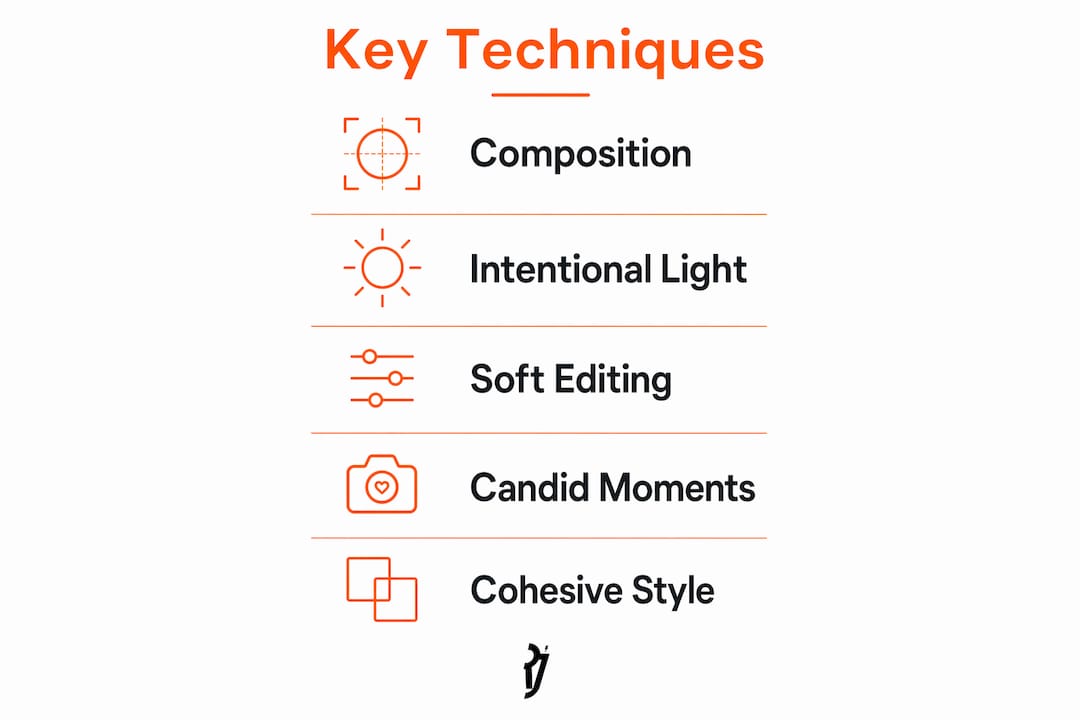
Fine art wedding photographers use a specific set of methods that, together, create the style’s signature look. Understanding these techniques helps you recognise the real thing when you see it.
- Controlled composition. Every frame is built with intention. The photographer considers background clutter, leading lines, negative space, and the position of edges before shooting. Nothing is left to chance.
- Intentional lighting. Soft, directional, and often natural light is preferred. Harsh flash is avoided wherever possible. Golden hour, window light, and open shade are the fine art photographer’s best tools.
- Calm, subtle direction. Subjects are guided gently into natural positions rather than posed rigidly. The aim is a relaxed, refined look that feels real rather than staged.
- Minimal post-production reliance. Fine art photographers meticulously compose every frame, controlling background, edges, and light quality in-camera. Editing refines; it does not rescue.
- Curation over volume. The final gallery is edited down to the strongest images. Every picture earns its place. You receive fewer images than a documentary shoot, but each one is genuinely worth keeping.
The editing style in fine art photography tends toward soft, film-like tones with gentle contrast and muted highlights. That look is achieved in-camera first and refined in post-production second. When you see a gallery where every image shares the same mood, that is the fine art workflow working as it should.
Pro Tip: When reviewing a photographer’s portfolio, scroll past the hero shots and look at the quieter moments. Candid table shots, getting-ready details, and reception dancing all reveal whether the fine art style holds up across the full day or only in controlled portrait sessions.
How to choose a fine art wedding photographer that fits your vision
Choosing the right photographer goes well beyond liking their Instagram feed. The most reliable method is to request 2–3 complete galleries from full wedding days. Highlight reels are curated to impress. Full galleries reveal the truth about consistency. A photographer who delivers 400–800 images from a single-shooter wedding should be able to show you that every one of those images carries the same visual quality.
Here is a clear process for vetting photographers:
- Review full galleries, not just highlights. Ask to see at least two complete wedding days. Look for consistent light, composition, and colour palette from the first image to the last.
- Check delivery timelines. The standard turnaround for a full wedding gallery is six to eight weeks. Knowing this helps you plan and sets realistic expectations.
- Book a consultation. Industry experts recommend in-person or virtual consultations to assess personality fit. A photographer you feel comfortable with will draw out more natural, relaxed expressions on the day.
- Ask about their process. A fine art photographer should be able to explain how they approach light, composition, and direction. Vague answers suggest a style that exists only in editing software.
- Assess their authentic style across different venues. A great fine art photographer adapts their approach to a country house, a city venue, and a coastal setting while maintaining the same visual voice.
Couples who genuinely connect with their photographer achieve more authentic and relaxed photo sessions. That connection is not a bonus. It is a core part of the fine art outcome.
Pro Tip: Trust both your eyes and your gut. If you love the images but feel awkward in the consultation, the photos on your wedding day will likely reflect that discomfort. Style and rapport both matter.
How does fine art wedding photography compare to other popular styles?
Understanding where fine art sits among other wedding photography styles makes choosing much easier. Each style has a different philosophy, and knowing the differences helps you decide what suits your personality and venue.
| Style | Core approach | Lighting | Posing | Editing |
|---|---|---|---|---|
| Fine art | Curated, print-first, intentional | Soft, natural, controlled | Gentle direction | Film-like, cohesive tones |
| Documentary | Observational, unposed | Available light | None | Natural, minimal |
| Editorial | Fashion-influenced, stylised | Dramatic, often artificial | Strong direction | High contrast, bold |
| Traditional | Formal, group-focused | Flash, studio-style | Structured poses | Clean, neutral |
Documentary photography captures moments as they happen without intervention. It is honest and spontaneous, but it does not guarantee beautiful light or clean composition. Editorial photography borrows from fashion and advertising, producing dramatic, stylised images that can feel more like a magazine shoot than a wedding. Traditional photography prioritises formal groups and posed portraits, which suits families who want clear, recognisable records of the day.
Fine art blends artistic curation with genuine storytelling. It is more directed than documentary but far less staged than editorial. The goal is images that feel real and look extraordinary at the same time. Fine art style pairs best with venues that offer soft, controllable light, such as a country house with large windows, a barn with open doors, or an outdoor ceremony at golden hour. That pairing of style and setting is where the approach truly shines.
What practical tips should couples know when planning fine art wedding photography?
Preparation makes a real difference to the quality of your fine art images. A few thoughtful decisions before the day can significantly improve what you take home.
- Match your photographer to your venue. A fine art photographer who specialises in bright, airy spaces may struggle in a dark, low-lit venue. Ask specifically whether they have shot in a similar setting before.
- Build a concise shot list. A focused shot list aligned with the fine art aesthetic helps capture the moments that matter without over-directing the day. Avoid exhaustive posed checklists, as they undermine the natural look the style depends on.
- Book an engagement shoot. Pre-wedding sessions help you become comfortable in front of the camera and build genuine rapport with your photographer. That comfort shows in every image on the wedding day.
- Schedule around natural light. Work with your photographer on a wedding photography timeline that places portraits during golden hour and key moments in the best available light.
- Communicate your aesthetic preferences clearly. Share reference images, describe the mood you want, and discuss colour palettes. Fine art photographers work best when they understand your vision before the day begins.
- Consider how your images will be displayed. Fine art prints displayed as wall art are a natural extension of the print-first philosophy. Thinking about display early helps your photographer understand the scale and framing you need.
Pro Tip: Ask your photographer to share their editing presets or a sample of their colour grading before you book. The editing style is as much a part of the fine art look as the composition. Make sure it matches what you love.
Key takeaways
Fine art wedding photography delivers heirloom-quality images through controlled composition, intentional light, and a consistent visual voice across the full wedding day.
| Point | Details |
|---|---|
| Print-first philosophy | Every image is curated to look exceptional as a physical keepsake, not just a digital file. |
| In-camera discipline | Composition and light are controlled before the shutter is pressed, not fixed in post-production. |
| Full gallery consistency | Request 2–3 complete wedding galleries to verify that the fine art style holds across an entire day. |
| Personality fit matters | Couples who connect with their photographer achieve more relaxed, authentic images on the day. |
| Venue and light pairing | Fine art style works best in venues with soft, controllable natural light such as country houses or outdoor settings. |
Why I believe fine art photography changes how you remember your wedding
I have photographed a lot of weddings, and the couples who come back to me years later are never the ones who wanted the most images. They are the ones who wanted the right images. Fine art wedding photography is not about volume. It is about creating a small collection of pictures that genuinely stop you in your tracks every time you look at them.
What I have noticed is that the quality of the relationship between photographer and couple directly shapes the quality of the images. When you feel at ease, you stop performing for the camera. Your expressions become real. Your laughter is genuine. That is when fine art photography does its best work, because the composition and light are already there, and all that is left is the authentic moment.
The couples who get the most from this style are the ones who trust the process. They share their vision clearly, they book an engagement shoot to get comfortable, and they let the day unfold without trying to control every frame. My job is to hold the artistic vision so that you can simply enjoy your wedding. The pictures that come from that approach are the ones that end up framed on walls and passed down through families.
My honest advice is this: do not choose a fine art photographer just because you love their portfolio. Choose them because you love their portfolio and you feel genuinely relaxed in their company. Both things need to be true. When they are, the results speak for themselves.
— Richard Jarmy
Richard Jarmy’s fine art wedding photography
If the fine art approach resonates with you, Richard Jarmy Photography offers full-day coverage built around the principles of clean composition, intentional light, and genuine connection with every couple. Every wedding is treated as a unique story worth telling beautifully.
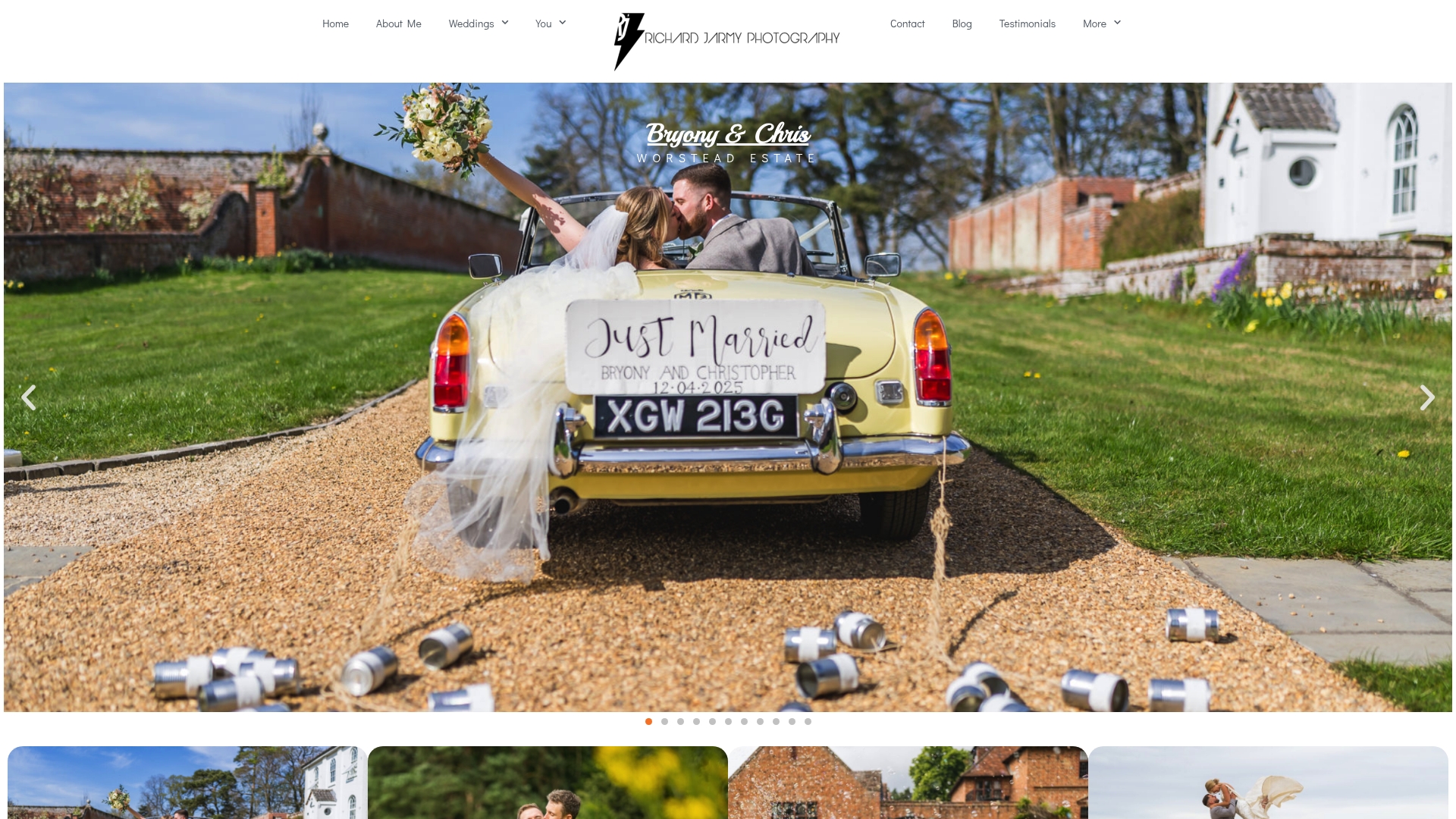
Richard Jarmy works closely with couples before the day through personalised consultations and engagement shoots, so that by the time the wedding arrives, you feel completely at ease. The result is a gallery of images that are warm, joyful, and genuinely worth keeping for a lifetime. Take a look at the wedding photography portfolio to see the full-day coverage, client testimonials, and the fine art style in action. When you are ready to talk about your day, Richard would love to hear from you.
FAQ
What is fine art wedding photography in simple terms?
Fine art wedding photography is a curated style that prioritises clean composition, intentional light, and a consistent visual tone across every image. The goal is a gallery of pictures that look as beautiful as art prints, not just candid snapshots.
How many images does a fine art wedding photographer deliver?
A single-shooter fine art photographer typically delivers 400–800 images from a full wedding day. The focus is on quality and consistency rather than volume.
How long does it take to receive a fine art wedding gallery?
The standard turnaround for a complete wedding gallery is six to eight weeks. This allows the photographer time to curate and edit every image to the same high standard.
Is fine art wedding photography right for every venue?
Fine art style works best in venues with soft, controllable natural light, such as country houses, barns with open doors, or outdoor settings at golden hour. It can be adapted to other venues, but lighting conditions significantly affect the outcome.
How do I know if a photographer genuinely shoots in a fine art style?
Request two or three complete wedding day galleries rather than highlight reels. Genuine fine art consistency shows up across the quieter moments of the day, not just the portrait sessions.