
Venue scouting is the practice of visiting a wedding location before the event to assess lighting, access, and operational conditions. It is the single most important preparation step a wedding photographer takes. Without it, a photographer arrives on your wedding day with assumptions rather than knowledge. The difference shows in every image. Richard Jarmy treats every pre-wedding site visit as a proper intelligence-gathering mission, not a quick look around. This guide explains exactly why wedding photographers scout venues, what they look for, and how that preparation directly shapes the quality of your memories.
Why wedding photographers scout venues: the photography planning advantage
Scouting transforms a venue from an unknown into a mapped, understood space. A photographer who has visited before knows which window floods the ceremony room with beautiful morning light and which corner creates harsh shadows by midday.
The most critical rule in venue scouting is to visit at ceremony time. Light changes dramatically throughout the day. A room that glows warmly at 11am can feel flat and grey by 3pm. Scouting at the wrong time of day gives a false picture of the real conditions your photographer will face.
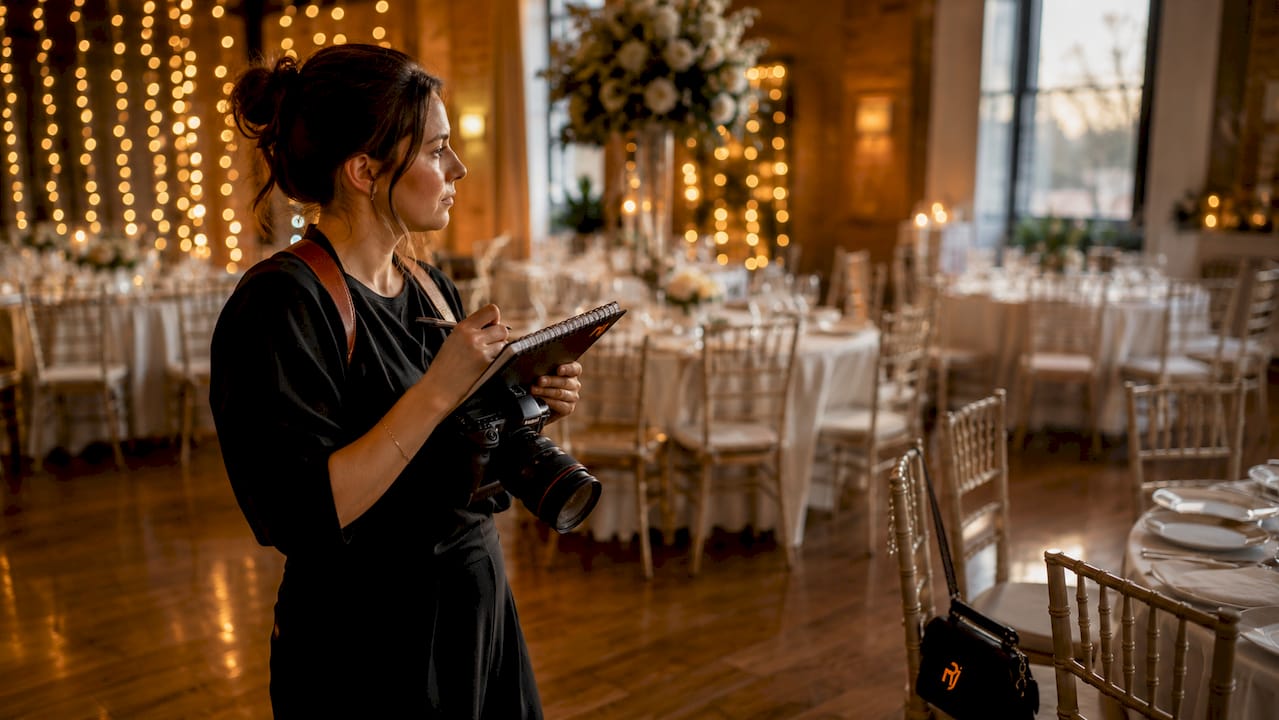
During a site visit, a photographer maps out specific locations for different types of shots. They identify spots for formal portraits, quiet corners for candid moments, and architectural features that add character to the story. They also test how ambient light interacts with any artificial lighting the venue uses, such as chandeliers, uplighters, or candles.
Equipment decisions follow directly from what scouting reveals. Venue restrictions on flash are common in historic buildings and churches. Knowing this in advance means a photographer can pack the right gear, perhaps choosing a fast prime lens and a high-ISO capable camera body rather than relying on a speedlight. That preparation is invisible on the day, but its results are not.
- Identify the direction and quality of natural light at ceremony time
- Locate the best angles for wide shots, portraits, and detail images
- Note any obstacles such as pillars, low ceilings, or cluttered backgrounds
- Test how artificial lighting affects skin tones and colour accuracy
- Check for restricted areas where photography is not permitted
Pro Tip: Visit the venue at the exact time your ceremony is scheduled. Even a 30-minute difference in arrival time can mean the difference between golden light streaming through a window and a blown-out, overexposed background.
How does scouting help with logistics and vendor coordination?
Logistics are just as important as lighting. A beautiful shot ruined by a catering trolley rolling through the background is a real risk on a busy wedding day. Scouting prevents it.
Coordinating with venue staff and vendors during a pre-visit allows a photographer to understand the full operational flow of the day. They learn where caterers enter and exit, where the florist sets up, and which corridors are used by staff throughout the event. That knowledge lets them position themselves and their equipment without blocking anyone or disrupting proceedings.
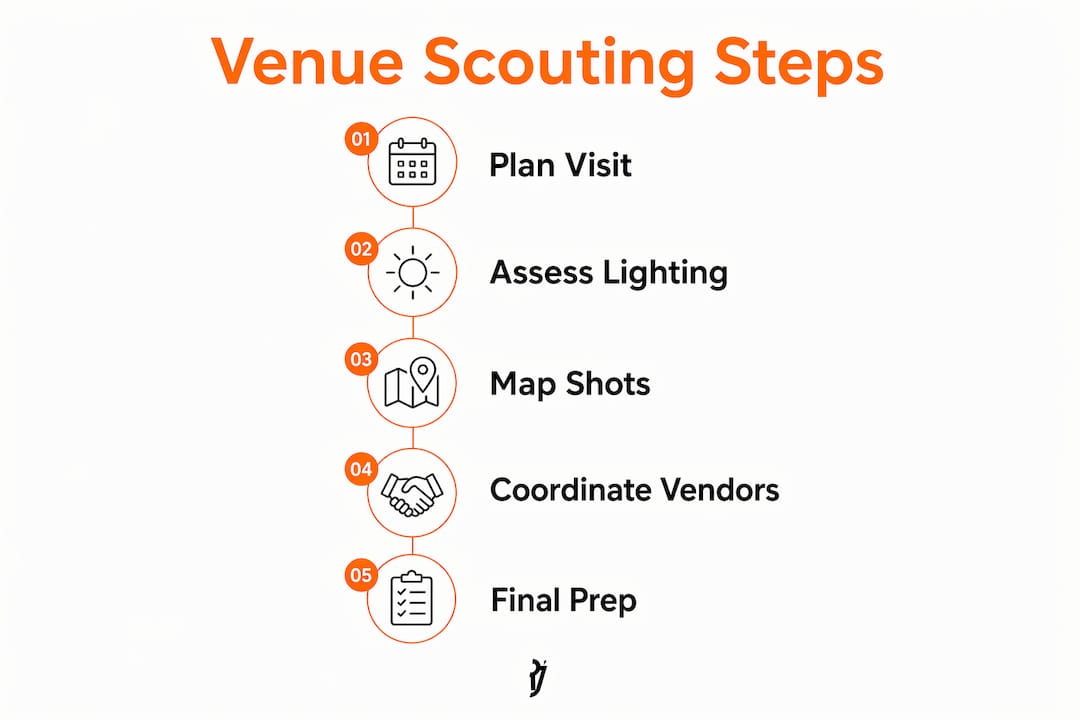
Scouting also reveals venue-specific rules that affect the day. Some venues prohibit tripods in the ceremony space. Others restrict photographers to specific zones during the meal. Knowing these rules in advance means no awkward conversations mid-ceremony and no missed shots because of an unexpected restriction.
Weather contingency planning is another scouting benefit that couples rarely think about. Identifying indoor alternatives during the site visit means a photographer already has a Plan B ready if rain forces everyone inside. They know which indoor spaces have good light and enough room for group shots, so the quality of your images does not depend on the weather.
- Map vendor access routes and loading zones to avoid equipment clashes
- Confirm photography restrictions such as flash bans or no-go zones
- Identify indoor spaces with sufficient light for weather contingency shots
- Understand the timing of key operational moments like meal service
- Build a relationship with venue coordinators who can assist on the day
Virtual tours vs in-person scouting: what is the real difference?
Virtual tours and venue brochures serve one purpose: to sell the space. They show the venue at its absolute best, often with professional lighting rigs, empty rooms, and carefully chosen angles. They present a sales version of the space, not the operational reality.
An in-person site visit reveals what a virtual tour cannot. The true test of a venue includes sensory details: how loud the road noise is during quiet moments, how warm the room gets when it is full of guests, and whether the natural flow of the space actually works for the day’s programme. These are the details that affect photography and atmosphere in equal measure.
Site visits transform brochure information into a tangible understanding of what the venue is actually like to work in. A photographer who relies solely on a virtual tour is making decisions based on a marketing image, not reality.
| What you see | Virtual tour | In-person scouting |
|---|---|---|
| Lighting conditions | Professionally lit, idealised | Real ambient and artificial light at event time |
| Room dimensions | Appears spacious | Actual usable space with furniture and guests |
| Sound environment | Silent | Road noise, echo, air conditioning hum |
| Temperature | Not assessable | Heat build-up with guests and catering |
| Vendor access routes | Not shown | Fully mapped and understood |
| Restricted areas | Not disclosed | Confirmed with venue staff |
The table above makes the gap clear. Every item in the right-hand column directly affects the quality of your wedding photographs. A photographer armed with that real knowledge makes better decisions at every stage of the day.
When and how do photographers conduct a venue scouting session?
Professional venue scouting happens in two stages. The first is a dedicated pre-wedding visit, ideally a few weeks before the event. The second is an early arrival on the wedding day itself for final checks.
During the pre-wedding visit, a photographer walks the entire venue with a purpose. They take reference shots on their phone or camera to share with you, so you can see the spaces through a photographer’s eye before the day. Leading photographers capture empty venue shots and share them with couples to align on the visual vision. This is a genuinely useful conversation starter. You might discover a courtyard you had forgotten about, or agree that the library is a better backdrop for portraits than the main hall.
On the wedding day itself, arriving 45–60 minutes early is the industry-standard window for final checks. That time is used to test lighting adjustments, shoot atmospheric empty venue details, and confirm the day’s running order with the venue coordinator. Those empty venue shots, taken before guests arrive, are often among the most treasured images in a wedding album.
- Book a dedicated pre-wedding site visit at least two to four weeks before the event
- Arrive at the venue at the same time as the ceremony to assess real lighting conditions
- Walk every space the day will use, including the ceremony room, reception area, and gardens
- Take reference shots to share with the couple and use for planning
- Speak with the venue coordinator to confirm restrictions, access routes, and the day’s schedule
- Arrive 45–60 minutes early on the wedding day for final lighting tests and atmospheric shots
- Document your findings with notes and images to inform your shot list and equipment choices
Pro Tip: Use your phone to film a short walk-through video of each space during your pre-wedding visit. It is far easier to review a 60-second clip than to rely on memory when you are planning your shot list at home.
You can find a full breakdown of what to prepare in this wedding photography checklist, which covers everything from scouting to the final edit. For outdoor ceremonies in particular, the outdoor wedding photography guide goes into detail on how to assess natural light and weather contingencies.
Key takeaways
Venue scouting is the foundation of great wedding photography: it replaces guesswork with knowledge, giving your photographer the confidence to capture every moment beautifully.
| Point | Details |
|---|---|
| Scout at ceremony time | Visit the venue at the exact time of day the ceremony will take place to assess real lighting. |
| In-person beats virtual | Virtual tours show a sales version; only a site visit reveals sound, heat, and operational flow. |
| Logistics matter as much as light | Mapping vendor routes and restrictions prevents disruptions and missed shots on the day. |
| Arrive early on the wedding day | A 45–60 minute early arrival allows final checks, atmospheric shots, and vendor coordination. |
| Document everything | Reference shots and notes from scouting sessions directly improve shot lists and equipment choices. |
Why I think scouting is the most underrated part of wedding photography
Most couples focus on the photographer’s style and portfolio when choosing who to hire. That makes complete sense. But the work that actually determines whether those beautiful images happen on your day is done weeks before, in an empty room, with no one watching.
I have walked into venues on wedding days where I had no prior visit, usually because of last-minute bookings or venue changes. The difference in confidence is immediate and real. When I know a space, I move through it with purpose. I know where the light will be at 2pm. I know which door the caterers use. I know the registrar prefers no flash during the signing. That knowledge is not instinct. It is preparation.
The thing that surprises couples most when I explain my scouting process is how much of it is about them, not just the venue. When I share reference shots from a pre-visit, it opens up a conversation about what they actually want. Sometimes a couple has never thought about portraits in the walled garden because they assumed it was just a car park. Scouting finds those hidden gems and puts them on the table.
Scouting also changes how I feel on the wedding day itself. Stress is the enemy of good photography. When I arrive knowing the space, I can focus entirely on the people and the moments, which is where the real joy lives. The fun, candid style I love most only happens when I am relaxed and present, not mentally mapping a room I have never seen before.
— Richard Jarmy
How Richard Jarmy Photography approaches venue scouting
Every wedding Richard Jarmy photographs begins with a proper site visit, not a quick scroll through a venue website. That preparation is what allows the wedding photography to feel natural, joyful, and completely free of the stiff, posed look that comes from a photographer who is still figuring out the space.
Richard’s approach combines thorough pre-wedding scouting with an early arrival on the day, so every moment from the first detail shot to the last dance is captured with confidence. If you are planning your wedding and want a photographer who genuinely prepares for your specific venue, take a look at the wedding gallery to see what that preparation looks like in practice. Get in touch to talk through your day.
FAQ
Why do wedding photographers visit venues before the wedding day?
Photographers visit venues in advance to assess real lighting conditions, map shot locations, and understand operational logistics. This preparation prevents surprises on the day and directly improves the quality of the images.
What do photographers look for when scouting a venue?
They assess natural and artificial light at ceremony time, identify locations for portraits and candid shots, note any restrictions such as flash bans, and map vendor access routes to avoid disruptions.
Is a virtual tour enough for a wedding photographer to prepare?
A virtual tour shows an idealised, sales-focused version of the venue. In-person scouting reveals the real conditions, including sound, temperature, and operational flow, that a virtual tour cannot capture.
How early should a wedding photographer arrive on the day?
Arriving 45–60 minutes early is the professional standard. That window allows for final lighting tests, atmospheric empty venue shots, and coordination with venue staff before guests arrive.
Does venue scouting help with bad weather?
Yes. During scouting, photographers identify indoor spaces with good light and enough room for group shots. That preparation means a rainy day does not compromise your photographs, because a Plan B is already in place.